A productive workplace is not just about having comfortable furniture, modern technology or well-designed interiors. The surrounding environment also plays an important role in how employees concentrate, communicate and complete their daily tasks.
One common challenge in modern offices is unwanted noise. Conversations, telephone calls, meetings, office equipment and movement between departments can create distractions that make it difficult for employees to focus.
This is where acoustic partitions can make a meaningful difference.
Acoustic partitions help manage sound within indoor spaces while providing greater flexibility in office layouts. They allow businesses to create quieter meeting rooms, private discussion areas and dedicated workspaces without relying entirely on permanent construction.
In this guide, AlTharwaneya Interior Solutions explores how acoustic partitions improve workplace productivity and why they are becoming an important consideration in modern commercial interior design.
What Are Acoustic Partitions?
Acoustic partitions are specialised wall systems designed to help reduce sound transmission between different areas. They are used to create separate spaces while supporting better acoustic comfort and privacy.
Unlike ordinary decorative dividers, acoustic partition systems are designed with sound-reducing materials and construction features. Depending on the system, these may include insulated internal panels, specialised seals and carefully engineered joints.
In commercial environments, acoustic partitions are commonly used in:
- Corporate offices and meeting rooms.
- Conference and training facilities.
- Hotels and hospitality venues.
- Educational institutions.
- Multipurpose commercial spaces.
- Shared workspaces and business centres.
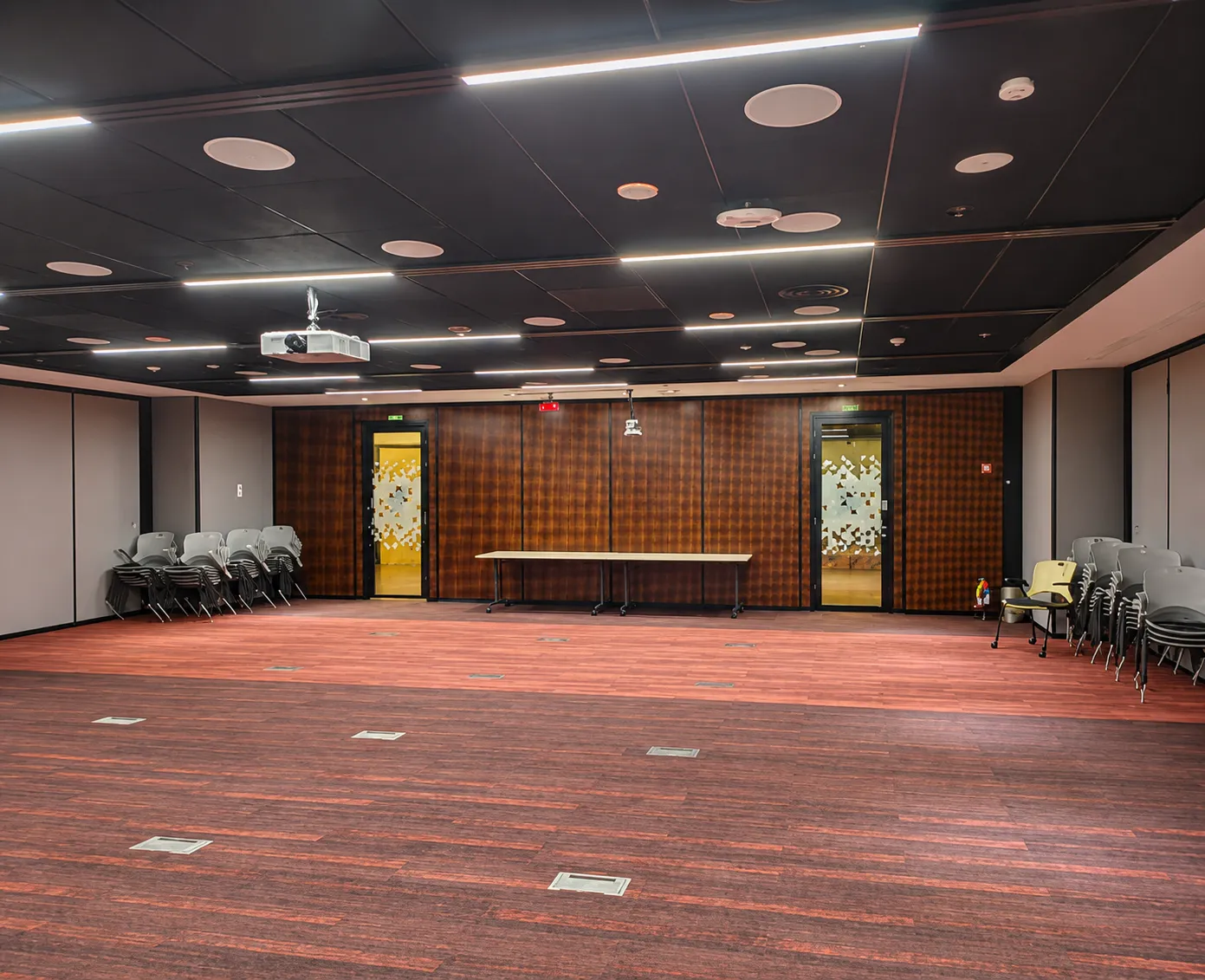
Operable acoustic partitions provide an additional advantage: they allow spaces to be divided or combined according to changing requirements.
7 Ways Acoustic Partitions Improve Workplace Productivity
1. Reduce Noise Distractions
Unwanted background noise is one of the common challenges in open-plan offices. Employees working on reports, presentations, research or other detailed tasks may find it difficult to concentrate when conversations and telephone calls are constantly happening nearby.
Acoustic partition systems help reduce sound transmission between designated areas, creating a more comfortable environment for focused work.
By separating noisy activities from quieter workspaces, businesses can better manage their office environment and minimise unnecessary distractions.
2. Create Private Meeting Spaces
Not every workplace discussion should take place in an open office environment. Client consultations, team discussions, interviews and confidential conversations often require greater privacy.
Acoustic movable partitions allow businesses to create dedicated meeting areas when needed.
Instead of permanently dedicating large sections of an office to separate rooms, operable wall systems can help organisations adapt their layouts according to the number of people and the type of meeting.
This makes better use of available floor space while supporting more suitable communication environments.
3. Improve Employee Concentration
Different workplace activities require different levels of concentration. Employees handling financial documents, preparing presentations, attending virtual meetings or completing creative tasks may benefit from quieter surroundings.
Acoustic partitions help establish separate functional zones within the same office.
For example, a business can organise its interior into:
- Quiet areas for individual work.
- Collaborative zones for team discussions.
- Meeting rooms for presentations.
- Training spaces for group activities.
This type of workplace planning helps employees choose an environment that better matches their tasks.
4. Support Better Communication
A noisy environment can make conversations difficult. Employees may struggle to hear colleagues clearly during meetings, while online discussions can become uncomfortable when background noise interferes with communication.
Acoustic partition systems can help improve the acoustic conditions of enclosed meeting spaces by reducing sound transmission and limiting some unwanted noise.
The result is a more suitable environment for presentations, discussions, video conferences and collaborative activities.
5. Provide Greater Workplace Flexibility
Modern businesses do not always need the same office layout every day. A space used for a small team meeting in the morning may need to accommodate a larger presentation or training session later.
This is where operable acoustic partitions become particularly useful.
Unlike permanent walls, operable partitions can be opened, closed and repositioned to change the configuration of a space.
For example:
- A large meeting room can be divided into two smaller rooms.
- A training hall can be separated into individual learning spaces.
- A conference area can be opened for larger corporate events.
- A shared commercial space can accommodate different activities throughout the day.
This flexibility allows businesses to use their available floor area more efficiently.
6. Improve Employee Comfort and Workplace Experience
A comfortable working environment contributes to a more positive employee experience. Continuous noise, interruptions and a lack of privacy can make everyday office activities more challenging.
Acoustic partitions help businesses create a better balance between collaborative and focused working environments.
By providing designated spaces for different activities, organisations can make their workplaces more organised, functional and comfortable.
7. Make Better Use of Available Office Space
Office space is a valuable business resource. However, permanently dividing every area into separate rooms may limit how the available floor area can be used.
Movable acoustic partitions offer an alternative by allowing businesses to modify their layouts as requirements change.
A large space can remain open when collaboration is required and be divided into smaller sections when privacy or separate activities are needed.
This makes operable partition systems particularly useful for businesses that regularly host meetings, training sessions, presentations and corporate events.
Acoustic Partitions vs Traditional Fixed Walls
When planning a commercial interior, businesses often need to decide between permanent walls and movable partition systems.
Both options have their place, but they serve different purposes.
Traditional fixed walls:
- Provide permanent room divisions.
- Are suitable for spaces with consistent layouts.
- Generally require construction work to change the room configuration.
- Offer limited flexibility once installed.
Operable acoustic partitions:
- Allow spaces to be divided or combined when required.
- Support changing office and meeting room configurations.
- Help businesses make more flexible use of existing floor space.
- Can provide sound-reducing performance when appropriately specified and installed.
The right solution depends on the intended application, acoustic requirements, building conditions and long-term space planning needs.
Important Features to Consider When Choosing Acoustic Partitions
Not all partition systems offer the same performance or functionality. Businesses should evaluate several factors before selecting a solution.
Acoustic Performance
Consider the required sound reduction level based on the activities taking place in each room. For spaces requiring greater acoustic separation, ask for tested acoustic performance ratings and supporting documentation.
Panel Construction
The panel materials, internal construction and overall system design influence the partition's performance, durability and appearance.
Sealing Mechanism
Effective acoustic separation depends on more than the panel itself. Proper sealing at the top, bottom and joints is important for limiting sound leakage.
Ease of Operation
For spaces that need frequent reconfiguration, consider how easily the panels can be moved and secured. A well-designed operable system should allow convenient room changes.
Installation and Space Requirements
The building structure, ceiling height, available storage space and installation conditions should all be assessed before selecting an operable partition system.
Design and Interior Compatibility
Acoustic partitions should complement the surrounding interior. Finishes, colours and materials can be selected to suit the design requirements of the commercial space.
Why Businesses in the UAE Are Considering Acoustic Movable Partitions
Commercial environments in the UAE include corporate offices, hotels, conference facilities, educational institutions and multipurpose venues. Many of these spaces need to accommodate different activities without permanently changing their layouts.
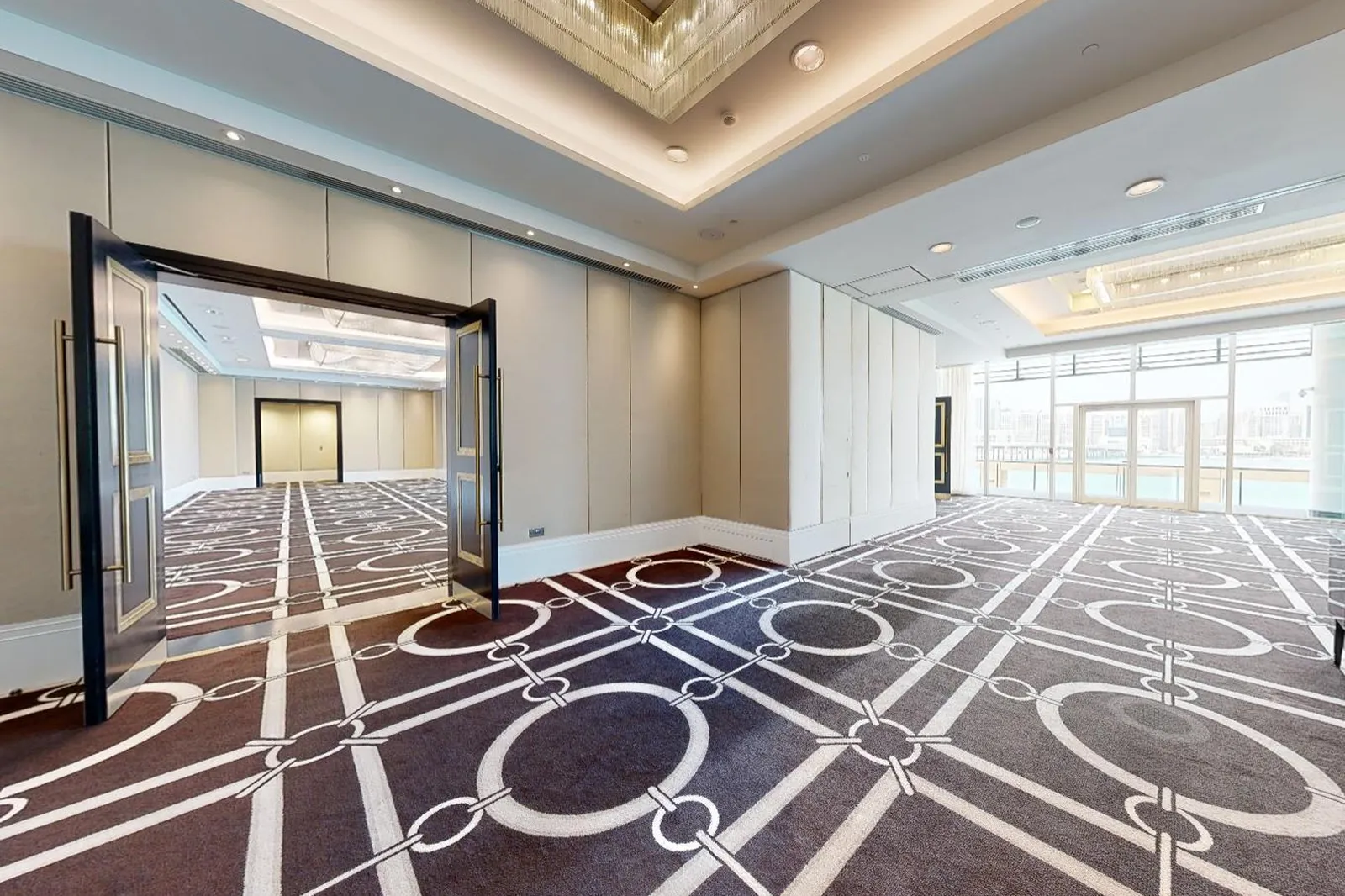
For example, a hotel conference hall may need to host a large corporate event one day and several smaller meetings the next.
Similarly, an office may require private meeting rooms during certain hours while maintaining an open collaborative environment at other times.
Operable acoustic partition systems offer a practical way to accommodate these changing requirements.
By combining flexible space division with sound-reducing features, businesses can create interiors that support different working arrangements while making better use of available space.
Final Thoughts
Workplace productivity depends on more than individual effort. The surrounding environment, including noise levels, privacy, communication and space organisation, can influence how effectively employees perform their daily tasks.
Acoustic partitions provide a practical solution for businesses looking to manage sound, create dedicated work areas and improve the flexibility of their commercial interiors.
For organisations planning modern office spaces, conference facilities or multipurpose environments, operable acoustic wall systems can help create more adaptable and functional layouts.
At AlTharwaneya Interior Solutions, we specialise in operable and movable wall solutions designed for commercial interior environments. Our systems help businesses create flexible spaces that can be adapted to changing operational requirements.
Explore our solutions at www.atis-azoz.com or contact our team at +971 52 262 2933 to discuss your project requirements.
Frequently Asked Questions
1. How do acoustic partitions improve workplace productivity?
Acoustic partitions help reduce unwanted sound transmission between work areas, supporting better concentration, privacy and communication. They also allow businesses to organise their offices into dedicated spaces for different activities.
2. Are acoustic partitions suitable for open-plan offices?
Yes. Acoustic partitions can help create separate meeting areas, quiet workspaces and collaborative zones within open-plan offices. The appropriate system depends on the layout and acoustic requirements.
3. What is the difference between acoustic partitions and regular partitions?
Regular partitions primarily divide physical space, while acoustic partitions are designed with additional sound-reducing features to help limit noise transmission between areas.
4. Can acoustic movable walls divide a large meeting room?
Yes. Operable acoustic walls can divide suitable large rooms into smaller meeting spaces. They can also be opened to combine the areas when a larger space is required.
5. Do acoustic partitions completely block sound?
No partition should be assumed to provide complete soundproofing. Actual acoustic performance depends on the system design, tested rating, seals, installation quality and surrounding building construction.
6. Where can acoustic movable partitions be used?
They are commonly used in offices, conference halls, hotels, educational institutions, training centres and multipurpose commercial venues where flexible room arrangements and sound management are important.
7. What should businesses consider before installing acoustic partitions?
Businesses should consider the required acoustic performance, panel construction, sealing mechanisms, ceiling conditions, storage requirements, operating method, design preferences and installation specifications.
Your email address will not be published. Required fields are marked *

Need assistance? Contact us today for professional advice and customized solutions.
Contact Us
ALTHARWANEYA INTERIOR SOLUTIONS – AZOZ OPERABLE WALL UAE Advanced Operable Wall, Movable Partition & Acoustic Sliding Folding Wall Solutions Across UAE & GCC